Complete Integration: Pairing Deep Live Cam with Powerful AI Voice Changers
Complete Integration: Pairing Deep Live Cam with Powerful AI Voice Changers
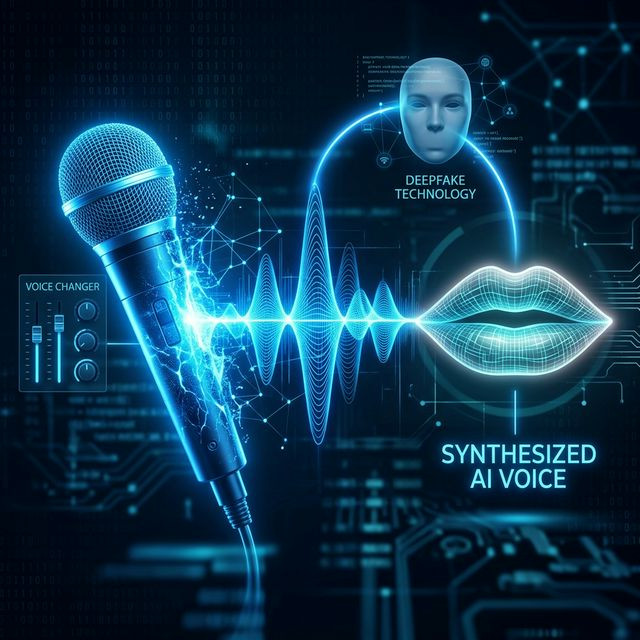
Achieving total visual anonymity is only half the battle. If you utilize Deep Live Cam to project a glowing sci-fi cyborg or a heavily bearded lumberjack onto your Twitch stream, but your audio feed features a standard, unprocessed voice, the cognitive dissonance shatters the immersion completely. True digital masking requires integrating your video pipeline with real-time AI Voice Modulation.
The RVC (Retrieval-based Voice Conversion) Protocol
Historical voice changers (like the old Voicemod filters) merely shifted pitch up or down, resulting in robotic, obvious filters. Modern Voice AI utilizes RVC. This software operates remarkably similarly to an image deepfake. It intercepts your physical microphone feed, deletes your vocal characteristics, and forces your speaking cadence through the pre-trained neural vocal cords of an entirely different person—allowing you to speak fluidly with the voice of an anime character or a gravel-voiced narrator.
The VRAM Balancing Act
Running highly active video neural networks alongside intense RVC auditory networks on a single commercial PC is an enormous challenge. Both processes demand immediate access to GPU VRAM limits. If you attempt to boot both without restrictions, the audio will crackle and stutter severely, ruining the broadcast.
The professional solution involves separating the workloads. Route Deep Live Cam strictly to utilize the CUDA cores on your dedicated NVIDIA Graphics Card, and force your Voice AI (like RVC or MorphVOX) to execute exclusively on your CPU threads. This prevents bottlenecking and ensures that both the visual mask and the vocal illusion remain unbroken and synchronous.


