The Future of NPCs: Integrating AI Faces Directly Into Next-Gen Video Games
The Future of NPCs: Integrating AI Faces Directly Into Next-Gen Video Games
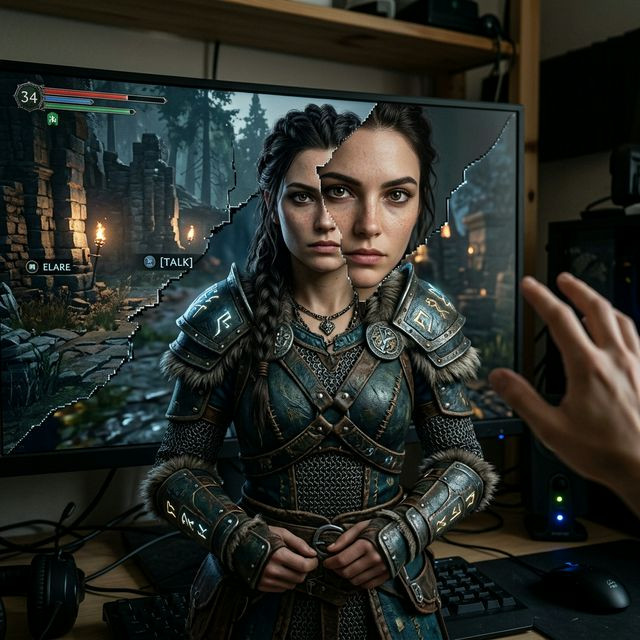
The technology driving applications like Deep Live Cam is not confined to webcams and streaming overlays. As generative AI becomes increasingly efficient, major video game studios are aggressively researching how to rip these local neural networks directly into graphics engines like Unreal Engine 5. The era of static, manually hand-sculpted NPCs is nearing its inevitable conclusion.
The End of Manual Polygon Rigging
Historically, creating a realistic character face in a video game required months of digital sculpting and complex skeletal rigging to ensure the mouth moved correctly when speaking. By embedding a lightweight, zero-shot ONNX model directly inside the game executable, developers can map hyper-realistic, biologically accurate faces over generic body meshes dynamically. Instead of drawing the face, the graphics engine simply outputs the mathematical coordinates, and the Tensor cores hallucinate a live, photorealistic face directly onto your monitor.
The Ultimate Personalized Gameplay
This integration opens doors to the ultimate customized experience. Imagine connecting your physical webcam to a game like Grand Theft Auto or Cyberpunk 2077. The game engine feeds your dynamic facial geometry directly into an internal `inswapper` node, seamlessly planting a perfectly modeled, emotive version of your own face directly onto the protagonist. When you smirk behind your desk, your character smirks in the cutscene. This blurs the line between gamer and game, forging an entirely new paradigm for narrative immersion.


