Can You Run Deep Live Cam on MacOS M1/M2 Silicon Processors?
Can You Run Deep Live Cam on MacOS M1/M2 Silicon Processors?
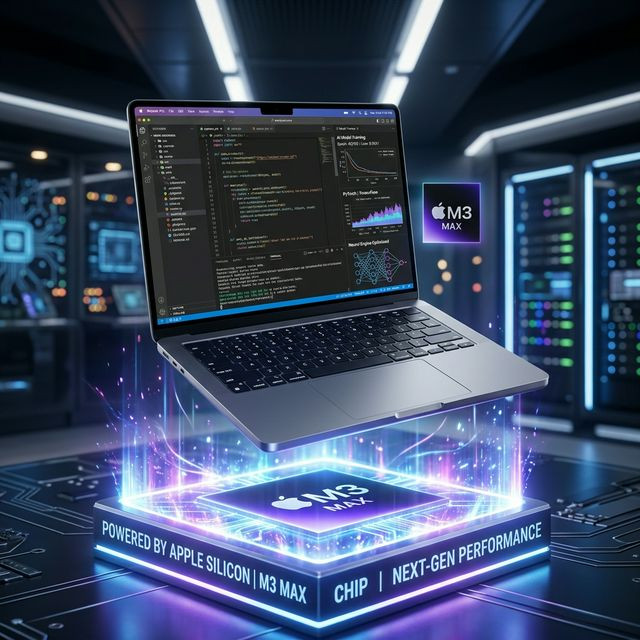
The vast majority of AI development happens on Linux and Windows machines powered directly by NVIDIA processors. This has historically left the massive base of Apple creators completely stranded. However, the introduction of the unified memory architecture in Apple's M-Series Silicon (M1, M2, M3 Max) has violently shifted the balance of power, sparking a desperate race to port software like Deep Live Cam to Mac frameworks.
The CoreML Breakthrough
Macs do not use CUDA (which is proprietary to Nvidia). To tap into the immense neural engine built into every M-series chip, developers must rewrite the execution layers to interface with Apple's `CoreML` (Core Machine Learning) framework.
Recent updates to the open-source community have finally established a stable bridge. By selecting `CoreML` as the execution provider within the launcher, the software bypasses CPU bottlenecks and violently harnesses the unified RAM to churn through the complex ONNX matrices.
Performance Expectations
Because Macbooks share RAM natively between the CPU and GPU (unified memory), an M2 Max with 64GB of RAM actually has an astronomical advantage for loading enormous models that would otherwise crash a standard 12GB NVIDIA card. While an M-series chip might lag slightly behind an RTX 4090 in raw frame-generation throughput, an entry-level MacBook Pro is more than capable of handling 720p at a blistering 30 FPS, making portable, battery-powered real-time broadcasting a total reality.

