Crossing the Uncanny Valley: Why Some Deepfakes Still Feel "Off"
Crossing the Uncanny Valley: Why Some Deepfakes Still Feel "Off"
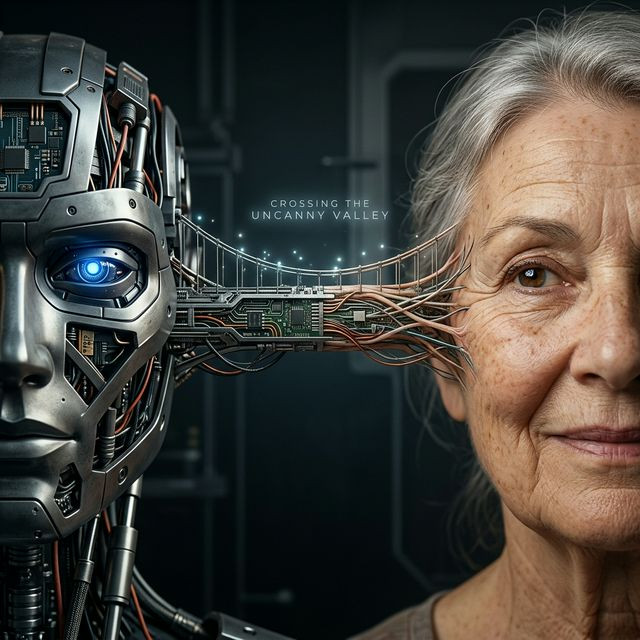
We are culturally fascinated by the "Uncanny Valley"—a psychological phenomenon occurring when a digital entity looks *almost* human, but possesses a minor, terrifying defect that triggers our primal survival instincts. Despite the immense processing power of software like Deep Live Cam, users frequently fall headfirst into this valley. What gives away the illusion?
The Micro-Expression Deficit
AI models are spectacular at mapping macro movements: opening mouths, blinking eyes, turning heads. However, human communication relies heavily on micro-expressions. The subtle twitch of a cheek muscle before a laugh, the dilation of pupils in varying light, or the complex wrinkling of the forehead. Current real-time networks often map a "smooth" mesh over the face, ironing out these critical, messy human imperfections, resulting in a plastic, botox-like stare.
The "Dead Eye" Syndrome
The human eye is wet, reflective, and constantly darting. Because deepfakes utilize mathematical geometry algorithms, they often struggle to calculate complex environmental reflections accurately. The resulting AI eyes lack the organic "spark" of specular light reflection, looking glassy and hollow.
To combat this in real-time streaming, advanced users utilize heavy, directional ring lights. By forcing a massive, consistent specular highlight directly into the center of the pupil, the AI tracker can maintain the geometry easier, and the enhanced light masks the dead-eyed effect, fooling the human brain and successfully bridging the uncanny valley.

